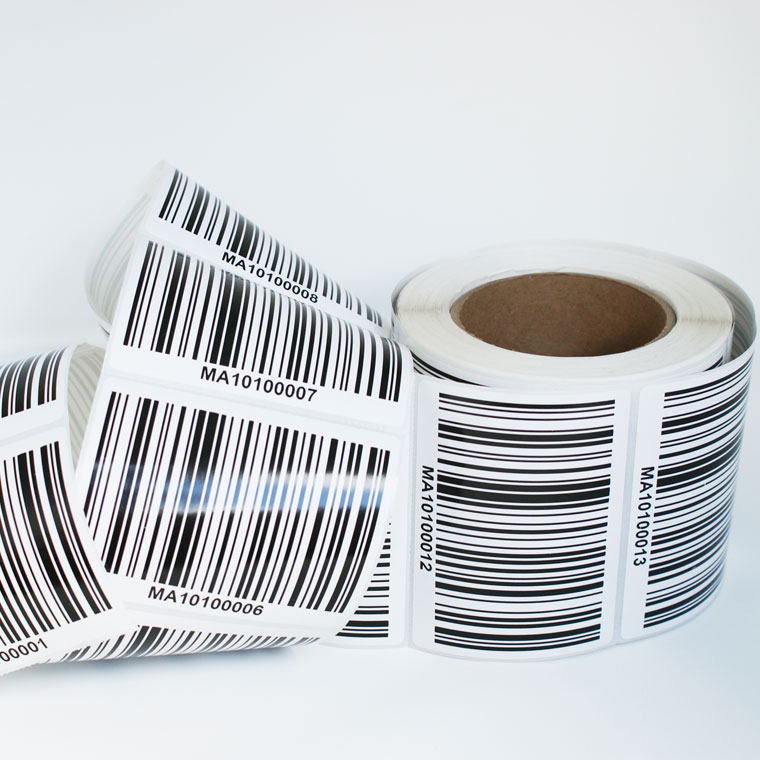


Barcodes 101 – A Quick Course in Barcode Printing
Barcodes are essential tools for product identification, inventory control, and retail operations. But choosing the right format and understanding how to print barcodes properly can be confusing if you are new to the process. This quick guide explains the main types of barcodes, how to obtain them, and how barcode printing works for your products.
What Is a UPC-A Barcode and How to Obtain It?
UPC-A barcodes (also called GTIN-12) are the standard in retail business in Canada and the United States. EAN-13 codes are used in the rest of the world. The two codes are numerical, and the image for the codes is identical. In fact, the UPC-A is essentially an EAN-13 code without the zero at the beginning of it.
UPC-A barcodes are issued exclusively by GS1, the organization responsible for standardizing product identification.
Here are the steps to obtain yours:
- Determine how many barcodes you need. Remember that each variation of product requires a unique barcode.
- Subscribe to GS1 Canada, choosing the type of subscription that will change based on your current and future barcode requirements. Your subscription is renewed annually.
- After subscribing, GS1 assigns GTINs (Global Trade Item Numbers), which are the numeric codes printed at the bottom of your barcodes.
- Once you have your GTINs, your designer or printer can generate the barcode images in the correct format for packaging or labels.
GTIN: A GTIN is the universal identifier that allows retailers and distributors to track products efficiently. Using the correct GTIN is essential, as accurate barcode printing depends on it.
What Is a 128 Code? A Flexible Type of Barcode for Logistics
A code 128 is an alphanumeric barcode that can include all 128 ASCII characters and is used mainly in warehouses, logistics, and transportation.
This type of barcode can encode:
- serial numbers
- lot or batch numbers
- weights and measurements
- expiration dates
- other variable data
Because of this, Code 128 is one of the most versatile types of barcodes used for internal tracking and supply chain management.
What About the QR Code? A Modern Type of Barcode with Many Uses
Almost everyone recognizes a QR code today. It’s made from small black and white squares and stores more information than a traditional linear barcode. QR codes can be read easily by smartphones, tablets, and other mobile devices.
QR codes are commonly used for:
- marketing campaigns
- business cards and menus
- tickets and travel documents
- traceability in production environments
QR codes do not require a GS1 license, making them accessible for businesses of all sizes.
How to Print your Barcodes? Ensuring Accurate Barcode Printing
Once you have selected the correct barcode type and obtained your GTINs (if applicable), the next step is barcode printing.
Free online barcode generators may be tempting, but they often produce low-resolution images that cause scanning errors. Retailers may even refuse products with unreadable barcodes.
To print barcodes correctly, ensure that your process includes:
- high-resolution printing
- correct sizing and quiet zones (blank margins)
- a printer capable of consistent, sharp output
Poor-quality barcode printing can lead to scanning failures at checkout, delays in warehouses, and product returns—so choosing the right tools is essential.
What Solutions Does Multi-Action Offer for Reliable Barcode Printing?
At Multi-Action, we provide professional tools and equipment that make it easy to manage and print barcodes with confidence. Here are a few options:
Nicelabel Software
Nicelabel is a label and barcode design software that connects directly to your product database, such as Excel files.
It allows you to:
- create accurate barcode labels
- automate data entry
- reduce printing errors
This is ideal for companies handling large inventories or frequent label updates.
Barcode Printers and Readers
If you prefer to print barcodes in-house, Multi-Action offers a selection of barcode printers and barcode readers suitable for a wide range of industries.
A barcode printer ensures consistent, high-quality output—critical for meeting retail requirements.
Custom Label Manufacturing
We also manufacture custom product labels and can integrate barcodes directly during production.
Our digital presses allow us to include:
- sequential barcodes
- sequential numbering
- VDP (Variable Data Printing) barcodes
Variable Data Printing: This technology enables the printing of unique information on every label, making it ideal for lot numbers, serial numbers, and traceability systems.
If you need support in choosing the best barcode printing method, understanding your GTINs, or selecting the right barcode printer, our team is here to help.
Contact us to tell us about your project, and we’ll recommend the best solution for your needs.